Car maintenance checklist - 30-point inspection

A car maintenance checklist covers six systems across 30 check points, takes 45 minutes, and needs no tools beyond a tire gauge and a flashlight. Print the checklist below, stash it in the glove box, and run through it monthly for visual items and every 6 months for the full sweep. Most modern shops bundle a multi-point inspection free with every oil change, but doing it yourself catches problems between service visits — a slow tire leak, a worn wiper, or a fresh fluid drip — that an oil-change-interval check would miss.
This is a tool, not an article. Each item below has one line for what to check and one line for what failure looks like. Pair it with your car maintenance schedule for the time-and-mileage side of the picture.
The 30-Point Checklist (Printable)
Run through these 30 items in order. The whole sweep takes 30-45 minutes for most cars. Items marked with a wrench icon (🔧 in the source PDF) need the car on ramps or a lift to inspect properly; the rest you can do on a flat driveway with the engine off. If any item fails, fix it before the next trip — or schedule it. None of the 30 items are filler. AAA's 2025 maintenance checklist hits the same six systems with slightly different category names; this version groups them by what you can check together in one pass so you only open and close the hood once.
The fast version — 10 items in 10 minutes: tire pressure (all four plus spare), tire tread depth, engine oil level, coolant level, brake fluid level, washer fluid, headlights, brake lights, turn signals, and a quick crawl under the front bumper looking for fresh fluid drips. These 10 items catch the failures most likely to leave you stranded or get pulled over. Do them on the first of every month. The full 30-point inspection below adds belts, hoses, suspension, undercarriage, and a road test — do it every 6 months or 5,000 miles.
Fluids (6 items)
| # | Check | What "bad" looks like |
|---|---|---|
| 1 | Engine oil — pull dipstick, wipe, reinsert, read | Below LOW mark, milky/foamy, gritty between fingers, dark and thin |
| 2 | Engine coolant — level in overflow tank, between MIN/MAX | Below MIN, rust-colored, oily film floating on top |
| 3 | Brake fluid — reservoir level, color | Below MIN, dark brown (should be light amber) |
| 4 | Power steering fluid — level, condition (skip if electric PS) | Below MIN, dark brown, foamy, or burnt smell |
| 5 | Transmission fluid — level, color (if dipstick equipped) | Below LOW, dark brown or black, burnt smell |
| 6 | Windshield washer fluid — fill if low | Empty or low; refill with -20°F fluid in winter climates |
Engine oil is item one because it's the cheapest failure to prevent and the most expensive to ignore — see the how to check oil guide for the dipstick procedure. Brake fluid darkening from amber to brown indicates moisture contamination; fluid that's absorbed more than 3% water lowers the boiling point enough to cause fade under hard braking, and most manufacturers spec a brake fluid change every 2-3 years. Most 2014+ vehicles (Hondas, Toyotas, and GM cars in particular) use electric power steering — skip item 4 if there's no reservoir under the hood.
Tires and Wheels (5 items)
| # | Check | What "bad" looks like |
|---|---|---|
| 7 | Tire pressure — all four plus spare, cold | More than 3 PSI off the door-jamb sticker spec |
| 8 | Tread depth — penny test or gauge | Below 4/32 inch (Lincoln's head fully visible in penny test) |
| 9 | Tread wear pattern — even across the tire | Center wear (overinflation), edge wear (underinflation), one-side wear (alignment), cupping (suspension) |
| 10 | Sidewall condition — cracks, bulges, embedded objects | Any bulge, cracks deeper than surface checking, screws or nails |
| 11 | Wheel and lug nuts — visual check for damage | Bent rims, missing lug nuts, rust streaks from a lug nut |
The U.S. Tire Manufacturers Association recommends replacing tires at 4/32 inch tread depth — not the federal legal minimum of 2/32 inch — because braking distance on wet pavement nearly doubles between 4/32 and 2/32. A bulge on the sidewall means the internal cords have separated; that tire can blow out at highway speed and should not be driven on. See how to check tire pressure for the cold-tire procedure and when to replace tires for tread depth and age guidelines.
Brakes (4 items)
| # | Check | What "bad" looks like |
|---|---|---|
| 12 | Front brake pad thickness — visible through spokes | Less than 3 mm (1/8 inch) of friction material remaining |
| 13 | Rear brake pad thickness — visible through spokes | Less than 3 mm (1/8 inch) of friction material remaining |
| 14 | Brake rotor surface — look through wheel spokes | Deep grooves, blue heat marks, lip on outer edge |
| 15 | Pedal feel and parking brake — firm, no pulsing | Soft pedal, pulses during stops, parking brake doesn't hold on a slope |
New brake pads start at 10-12 mm of friction material. At 3 mm, most pads have 1,000-2,000 miles left before the wear indicator starts to squeal. At 1.5 mm, the pad metal contacts the rotor and grinds — replacing both pads and rotors then costs 2-3× more than just pads. RepairPal's 2026 estimate puts independent-shop brake pad replacement at $150-$300 per axle; if the rotor scoring is deep enough to need replacement, add $200-$400 per axle.
Lights and Electrical (5 items)
| # | Check | What "bad" looks like |
|---|---|---|
| 16 | Headlights — low beam and high beam | Burned out, yellowed/hazy lens, aim too low or to one side |
| 17 | Tail lights and brake lights — including third brake light | Any bulb out; LED clusters with dark patches |
| 18 | Turn signals and hazards — all four corners | Fast-flashing turn signal indicates a burned-out bulb |
| 19 | Reverse and license plate lights | Burned out — license plate light is a common ticket |
| 20 | Battery — terminals, hold-down, age | White/blue corrosion on terminals, loose hold-down, date code over 5 years |
Walk around the car twice for lights — once with the lights on (parking, low beam, high beam) and once with a helper or by using a wall as a reflector while you brake-and-signal. Battery date codes are stamped on the case, usually as a letter (month) plus a digit (year). Most flooded lead-acid batteries last 3-5 years; AGM batteries in modern start-stop systems run 4-7 years. AAA roadside-assistance data has consistently shown dead batteries as the top reason for service calls, especially in summer heat. See car battery replacement for testing and replacement procedures.
Belts, Hoses, and Filters (5 items)
| # | Check | What "bad" looks like |
|---|---|---|
| 21 | Serpentine belt — cracks, glazing, missing ribs | More than 3 cracks per inch, shiny glazed surface, missing chunks |
| 22 | Radiator and heater hoses — soft spots, bulges | Squishy when squeezed cold, hardened, swollen, or wet at clamps |
| 23 | Engine air filter — pull from airbox, hold to light | Light doesn't pass through; visibly dirty or oil-soaked |
| 24 | Cabin air filter — behind glove box on most cars | Visibly black, leaf debris, musty smell from vents |
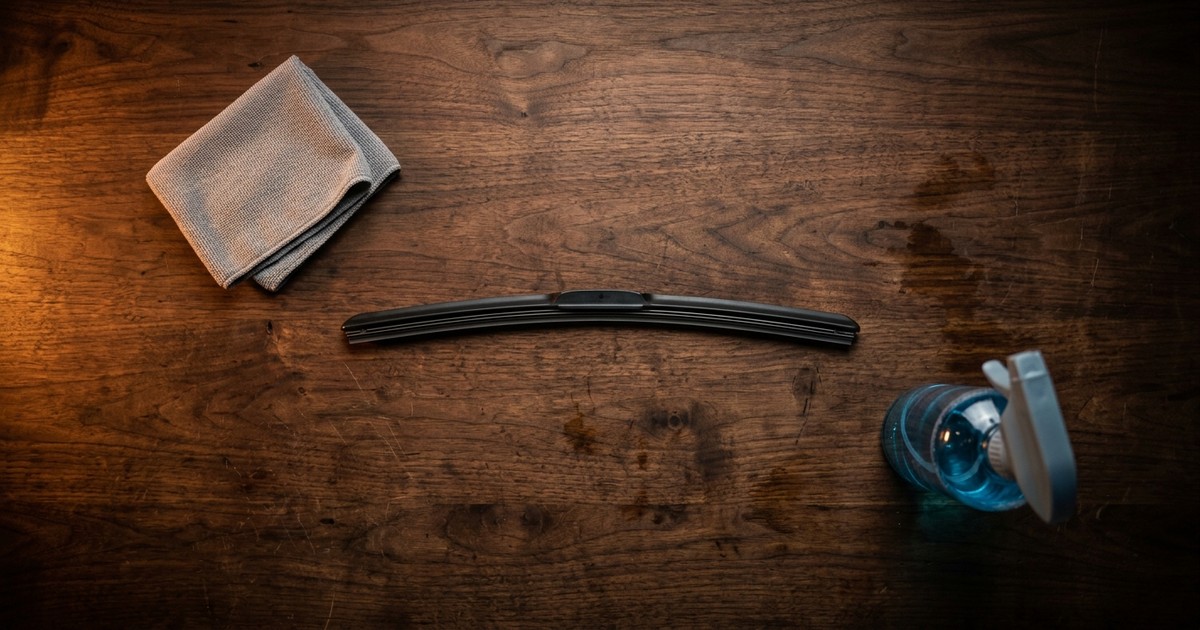
| 25 | Wiper blades — both front and rear | Streaking, chattering, torn rubber, leaving sheets of water |
A serpentine belt that breaks at highway speed loses power steering, water pump, and alternator simultaneously — replacement runs $80-$200 at most shops, and most manufacturers spec 60,000-100,000 miles. Hyundai and Kia, for example, list the drive belt as inspection at 60,000 miles and replacement as needed thereafter. If you have a timing belt rather than a timing chain (check your owner's manual), that's a separate, more expensive interval — typically 60,000-105,000 miles, $500-$1,200 to replace, and a snapped timing belt destroys an interference engine.
Suspension, Steering, and Undercarriage (5 items)
| # | Check | What "bad" looks like |
|---|---|---|
| 26 | Suspension bounce test — push each corner down | Bounces more than 1.5 times after release (worn shocks/struts) |
| 27 | Steering wheel play — engine off, wheels straight | More than 1 inch of free play before wheels turn |
| 28 | Fluid drips under car — leave cardboard overnight | Any fresh drip (red = transmission/PS, green/orange = coolant, brown/black = oil) |
| 29 | CV boots and ball joints — visible from wheel well | Torn rubber boots, grease splatter on inner fender, popping noise when turning |
| 30 | Exhaust system — pipes, muffler, hangers | Rust holes, rattling on cold start, hissing or roaring exhaust note |
Suspension is the most frequently skipped section of a DIY checklist because most items require getting under the car. The bounce test is the exception — push down hard on one corner of the bumper and release; a healthy shock returns the corner to ride height with at most 1.5 oscillations, while a worn one keeps bouncing. A torn CV boot lets grease out and grit in; left alone for 6 months, the CV joint fails and replacement costs $300-$800 per axle instead of $20 for a new boot. See wheel alignment for the steering and tire-wear signs that signal alignment is out.
Inspection Cost Comparison
This is what you'll pay if you skip the DIY route and hand the checklist to a shop. Most shops include a multi-point inspection free with an oil change — ask for the printout. A standalone inspection costs more because the shop isn't getting paid for the oil work.
Inspection pricing (2026 national averages): Multi-point inspection bundled with an oil change: $0 — free at virtually every chain (Jiffy Lube, Valvoline, Walmart) and dealer in the U.S. Standalone 30-point inspection at an independent shop: $0-$50. Pre-purchase inspection (used car, includes road test and scan tool): $100-$200 per RepairPal 2026 estimates. State safety inspection (where required by law): $7-$40, varies by state. DIY inspection with a $7 tire gauge and a flashlight: under $10 and 45 minutes of your time.
| Where | What's Included | Cost (2026) |
|---|---|---|
| DIY (this checklist) | All 30 items, your time | $0-$15 (tire gauge, flashlight) |
| Free multi-point with oil change | 20-30 items, written report | $0 (included with $30-$90 oil change) |
| Standalone shop inspection | 30+ items, written report, no oil change | $0-$50 |
| Used car pre-purchase inspection | 100+ items, scan tool, road test, lift inspection | $100-$200 (RepairPal, 2026) |
| State safety inspection (TX, PA, NY, VA, etc.) | State-mandated list, pass/fail | $7-$40 |
| Dealer multi-point inspection | Brand-specific items, OEM scan tool | $0 with service; $50-$150 standalone |
The free multi-point inspection that comes with every oil change is the highest-value option for most owners — pair it with this DIY checklist between visits and you cover the gap. The one inspection worth paying for in full is the pre-purchase inspection on a used car. RepairPal's 2026 nationwide estimate of $100-$200 buys 60-90 minutes with the car on a lift, a scan tool plugged into the OBD-II port, a compression test on request, and a road test. That's the cheapest insurance against a $4,000 hidden transmission problem on the used car you're about to buy.
How to Use the Checklist
This checklist works on three cadences. First, run the 10-item fast version monthly. Then, run the full 30-point inspection every 6 months or 5,000 miles. Finally, do a pre-trip subset (tires, fluids, lights) before any drive over 200 miles. The cadence matters: AAA's 2025 maintenance guide and the Car Care Council's service interval schedule both anchor inspections to time intervals rather than mileage alone, because rubber, fluids, and battery cells degrade on calendar time regardless of how much you drive.
Monthly (10 minutes)
- Items 1, 2, 5, 6 (oil, coolant, transmission, washer)
- Items 7, 8 (tire pressure, tread)
- Items 16, 17, 18 (headlights, brake lights, turn signals)
Every 6 months or 5,000 miles (45 minutes)
- All 30 items above
- Verify all warning lights illuminate at key-on, then extinguish after engine start
- Test the horn, parking brake, and all seat belts
Annual or 12,000 miles (full 30-point + shop check)
- All 30 items above
- Brake pad measurement with a caliper or mechanic's gauge
- Cabin air filter and engine air filter replacement if dirty
- Tire rotation (interval per tire rotation guide)
- Alignment check if you noticed pulling, uneven wear, or off-center steering wheel
Worked Example: 2022 Honda Civic at 36,000 Miles
To make this concrete, here's a real run-through of the checklist on a 2022 Honda Civic LX at 36,000 miles, May 2026. Total time: 38 minutes. Total tools: a $9 Accutire MS-4021B digital tire gauge and a flashlight.
- Fluids (items 1-6): Oil at upper-half of dipstick, light brown — 4,200 miles since last change, no top-off needed. Coolant at MAX, pink (Honda Type 2). Brake fluid at MAX, amber. No power steering reservoir (electric PS, skip item 4). No transmission dipstick on this CVT — Honda specs an ATF check at the dealer with a scan tool. Washer fluid full. Pass.
- Tires (items 7-11): All four at 33 PSI cold (door jamb says 32 PSI front, 30 PSI rear — rear tires 3 PSI high, vented). Tread: 8/32 inch on all four (new is 10/32). Even wear, no sidewall cracks, wheels clean. Pass.
- Brakes (items 12-15): Front pads at 7 mm visible through the spokes (new is 10 mm). Rear pads at 8 mm. Rotors smooth, no scoring. Pedal firm, no pulsing on the road test. Parking brake holds on a 5% slope. Pass.
- Lights (items 16-20): All exterior lights working. Battery date code 09/22 — 44 months old, still inside the 5-year window. No terminal corrosion. Pass.
- Belts, hoses, filters (items 21-25): Serpentine belt clean, no cracks. Hoses firm. Engine air filter passes a flashlight test (light visible through pleats). Cabin air filter was last changed at 25,000 miles — light still passes through, but yellowed; will replace at 40,000 miles. Wipers leaving a faint streak on the driver's side — flagged for replacement. One flag.
- Suspension and undercarriage (items 26-30): Bounce test clean on all four corners (Honda struts known to last 100K+ miles). Steering wheel play under 1/2 inch. No fluid drips on the driveway after 8 hours overnight. CV boots intact, no grease splatter. Exhaust clean. Pass.
Result: 29 of 30 items pass, one flag for wiper blades. A $20 set of Bosch ICON wiper blades and 10 minutes in the parking lot resolves the only issue. Total cost of the inspection: $0. Total cost of the fix: $20.
Take the car to a shop if the brake pedal feels soft, steering has more than 1 inch of play, you see unidentified fluid drips, or the check engine light is on. These are not DIY judgment calls — they are appointments.
DIY vs. Shop: When to Step Up
You can do 22 of the 30 items with no tools beyond a tire gauge and a flashlight. The 8 items that benefit from a shop or a lift are: brake pad thickness (a visual estimate through wheel spokes is fine for "pass," but the actual measurement requires removing the wheel), rotor scoring measurement, transmission fluid level on dipstick-less cars, suspension joint play (needs the wheel off the ground), CV boot inspection (easier with the wheel turned full lock or the car on a lift), exhaust mid-pipe inspection, fuel and brake line corrosion check, and the OBD-II scan for stored codes that haven't triggered a check engine light yet. A $35 OBD-II scanner handles that last item in your driveway.
Take the car to a shop instead of doing it yourself if any of these are true: the brake pedal feels soft or pulses, the steering wheel has more than 1 inch of play, you see fresh fluid drips you can't trace, the serpentine belt is cracked, or the check engine light is on. These are not DIY judgment calls — they're appointments.
A digital maintenance log captures each completed inspection with a timestamp and notes, and tracks every service against your vehicle's manufacturer schedule so the next 6-month check shows up as a push reminder rather than something you have to remember.
Frequently Asked Questions
Where can I get a printable PDF of the 30-point checklist?
Print this page directly — the tables above are formatted to print cleanly on a single sheet at standard letter size. For a clipboard-ready PDF, save the page from your browser's print dialog as "Save as PDF."
What's the difference between a 21-point, 30-point, and 60-point inspection?
The numbers are marketing more than standards — there's no industry definition. A 21-point inspection is usually a quick visual sweep (fluids, tires, lights, belts, hoses) that takes 10-15 minutes. A 30-point inspection adds brake and suspension checks. A 60-point or 110-point pre-purchase inspection adds OBD-II scan results, compression tests, undercarriage rust assessment, frame inspection, and a road test. For used car shopping, pay for the higher number.
Will a 30-point inspection catch a bad transmission?
Partially. A visual transmission inspection checks fluid level, color, and external leaks — that catches about half of common transmission problems. Internal wear (slipping, harsh shifts, delayed engagement) only shows up on a road test or with a scan tool reading transmission fault codes. If you suspect transmission trouble, ask the shop for a transmission-specific diagnostic — typically $50-$150 — rather than relying on a generic 30-point check.
Do I need to keep records of my DIY inspections?
Yes, if you plan to sell the car or use the records to support a warranty claim. Manufacturer warranties (powertrain, hybrid battery, emissions) require proof of maintenance, and a dated log of inspections plus receipts for fluids and filters satisfies most warranty audits. A handwritten notebook works; a digital log with photos works better. Pinion stores service entries with date, mileage, cost, and optional photos that survive the next phone change.
How do I check a used car before buying with this checklist?
Run all 30 items, then add: VIN check via NHTSA at nhtsa.gov/recalls for open recalls, Carfax or AutoCheck history report ($25-$40), and a 30-minute road test that includes highway speeds, hard braking, and parking-lot turns at full lock. Then pay $100-$200 for a professional pre-purchase inspection at an independent shop — not the seller's mechanic. The shop check picks up frame damage, prior accident repairs, and stored fault codes that a driveway inspection misses.
My state requires a safety inspection — does that count as a 30-point check?
No. State safety inspections in the 15 states that require them (including Texas, Pennsylvania, New York, Virginia, and Missouri as of 2025) test a fixed legal list — typically brakes, tires, lights, horn, wipers, and exhaust — and produce a pass/fail result. They don't check fluid condition, belt wear, suspension play, or filter cleanliness. The 30-point checklist on this page covers everything the state inspector checks plus another 20 items they don't.
Frequently Asked Questions
Vlad Kuzin
Developer of Pinion. Writes about car maintenance to help people save money and stay safe on the road.