Windshield wiper replacement - size and cost
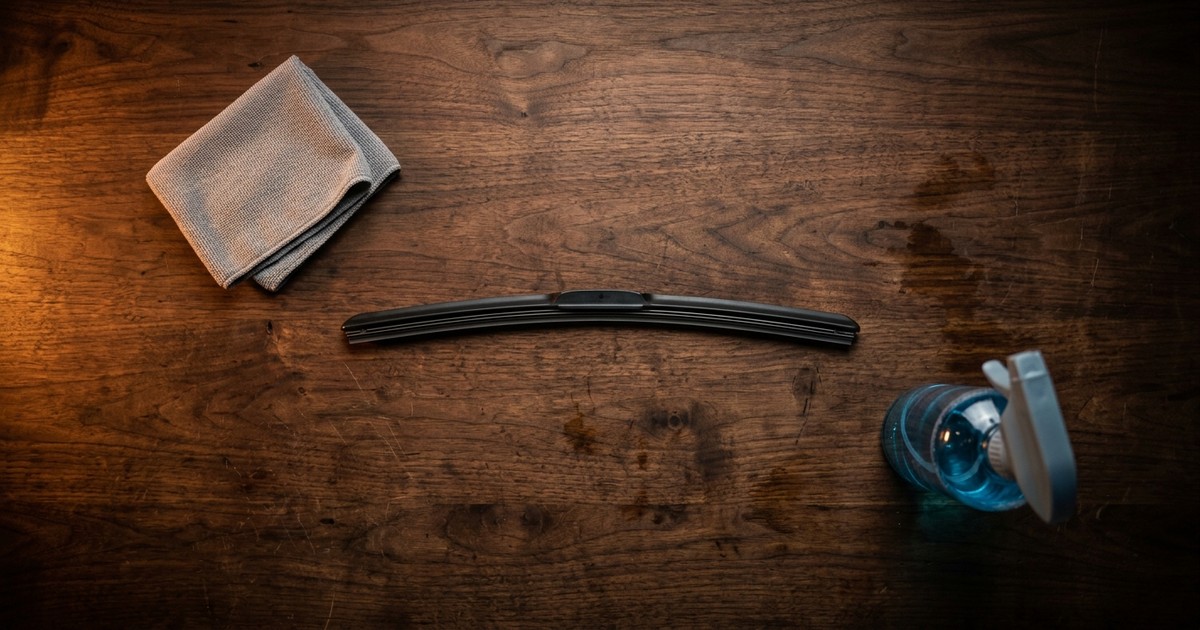
Wiper blade replacement is the easiest job on your car: it takes about five minutes, requires no tools, and costs $15-$40 for a complete set. Shops and dealerships charge $30-$60 for installation labor on top of the blades, money you do not need to spend. This guide covers the sizes for the 30 most common vehicles on U.S. roads, the real cost difference between blade types, and a 60-second install procedure.
How Much Does Windshield Wiper Replacement Cost?
Wiper blades cost $8-$20 each for conventional frame-style blades and $15-$30 each for beam-style blades like the Bosch Icon or Rain-X Latitude. Most vehicles need two front blades plus a rear blade on hatchbacks and SUVs, which puts total parts cost at $25-$70 for a complete set. Independent shops and dealerships charge $30-$60 in labor on top of the blades to install them, even though the install takes five minutes and requires no tools. AutoZone, O'Reilly, and Advance Auto Parts install blades for free when you buy them in-store, which is the only paid-install option that actually saves you time without costing money.
A complete wiper replacement costs $25-$70 in parts for two front blades and a rear blade. DIY installation takes 5 minutes and requires no tools. AutoZone, O'Reilly, and Advance Auto Parts install free with purchase. Independent shops charge $30-$60 in labor, and dealerships charge $40-$90, but both are unnecessary for a job this simple.
| Where you buy | Blade type | Per-blade price | 2-blade total | Install cost |
|---|---|---|---|---|
| Walmart | Conventional Anco / Trico | $8-$14 | $16-$28 | DIY |
| AutoZone / O'Reilly | Conventional Duralast / SuperTech | $10-$18 | $20-$36 | Free with purchase |
| AutoZone / O'Reilly | Beam (Bosch Icon, Rain-X Latitude) | $20-$30 | $40-$60 | Free with purchase |
| Amazon | Beam (Bosch Icon, Michelin Guardian) | $18-$28 | $36-$56 | DIY |
| Independent shop | Standard beam | $20-$35 | $40-$70 | $30-$60 |
| Dealership | OEM blade | $25-$45 | $50-$90 | $40-$90 |
Prices reflect 2026 national averages from AutoZone, O'Reilly, Walmart, and Amazon retail listings. Dealer installation prices come from Toyota, Honda, and Ford service writers in major U.S. metros.
How to Replace Windshield Wipers (Step-by-Step)
The procedure takes about five minutes for both front blades. First, lift the wiper arm straight off the glass until it locks upright. Second, press the small release tab on the underside of the blade where it meets the arm. Third, slide the old blade down and off the J-hook. Then, slide the new blade up the hook until it clicks. Finally, lower the arm gently back to the glass. The only thing you can break is the windshield itself, because if the bare wiper arm snaps down on the glass with no blade attached, the metal hook can crack it. Lay a folded towel over the glass before you start if you are unsure of your grip.
The 5-minute wiper install: lift the arm until it locks upright, press the release tab on the connector, slide the old blade down and off the hook, slide the new blade up the hook until it clicks, then ease the arm back to the glass. Do not let the bare metal arm snap back, since it can crack the windshield. Test with washer fluid before driving.
About 95% of vehicles on U.S. roads use J-hook wiper arms, where the U-shaped metal hook at the end of the arm is the connection point. The remaining 5% use pin-and-bayonet, side-pin, pinch-tab, or top-lock connectors found on European cars like the Audi A4, BMW 3-Series, and Mercedes E-Class and certain Ford and Chrysler trucks. Quality replacement blades like the Bosch Icon and Rain-X Latitude ship with multiple connector adapters in the box; the right adapter is usually pre-installed in the J-hook position.
If your wiper arm does not lock in the upright position (common on 2018-2024 Honda Civic and Toyota Corolla models), pull it up as far as it goes and hold it with one hand while you swap the blade with the other. The risk is the same: do not let the arm fall on the glass without a blade attached.
Windshield Wiper Size Chart by Make and Model
Wiper sizes vary by make, model, and model year, with most cars using two different sizes: a longer driver-side blade and a shorter passenger-side. The table below covers the 30 best-selling vehicles in the U.S., based on 2024 sales data, with sizes for current-generation models. Confirm against your owner's manual or the size-finder at boschautoparts.com or rainx.com before buying, since vehicles like the 2017+ CR-V changed sizes mid-generation.
| Vehicle | Driver side | Passenger side | Rear |
|---|---|---|---|
| Ford F-150 (2015-2026) | 22" | 22" | — |
| Chevrolet Silverado 1500 (2019-2026) | 22" | 22" | — |
| Ram 1500 (2019-2026) | 22" | 22" | — |
| Toyota RAV4 (2019-2026) | 26" | 16" | 12" |
| Honda CR-V (2017-2026) | 26" | 16" | 11" |
| Toyota Camry (2018-2026) | 26" | 18" | — |
| Honda Civic (2016-2026) | 26" | 19" | — |
| Toyota Corolla (2014-2026) | 26" | 18" | — |
| Honda Accord (2018-2026) | 26" | 19" | — |
| Nissan Rogue (2021-2026) | 26" | 17" | 11" |
| Jeep Grand Cherokee (2022-2026) | 24" | 21" | 12" |
| Toyota Highlander (2020-2026) | 26" | 21" | 14" |
| GMC Sierra 1500 (2019-2026) | 22" | 22" | — |
| Toyota Tacoma (2016-2026) | 21" | 19" | — |
| Ford Explorer (2020-2026) | 28" | 22" | 12" |
| Subaru Outback (2020-2026) | 26" | 19" | 12" |
| Subaru Forester (2019-2026) | 26" | 18" | 12" |
| Hyundai Elantra (2021-2026) | 26" | 16" | — |
| Hyundai Tucson (2022-2026) | 26" | 16" | 12" |
| Kia Sportage (2023-2026) | 26" | 18" | 12" |
| Mazda CX-5 (2017-2026) | 24" | 18" | 14" |
| Chevrolet Equinox (2018-2026) | 24" | 18" | 12" |
| Ford Escape (2020-2026) | 28" | 24" | 11" |
| Jeep Wrangler (2018-2026) | 15" | 15" | 12" |
| Tesla Model 3 (2018-2026) | 26" | 19" | — |
| Tesla Model Y (2020-2026) | 26" | 19" | 14" |
| Nissan Altima (2019-2026) | 26" | 17" | — |
| Volkswagen Jetta (2019-2026) | 24" | 19" | — |
| BMW X3 (2018-2026) | 26" | 20" | 11" |
| Honda Pilot (2023-2026) | 26" | 21" | 14" |
Driver and passenger blades on the same vehicle are almost never the same length. Buying two 26" blades for a Civic because the driver side is 26" is the most common mistake, because the passenger side needs a 19". Manufacturers chose different sizes to match the curvature of the windshield and the arc the wiper arm sweeps.
Conventional vs Beam vs Hybrid Wipers
Three blade types are sold today: conventional frame-style ($8-$15), beam-style ($15-$30), and hybrid ($15-$25). Conventional blades use a metal frame with multiple pressure points that hold a rubber squeegee against the glass. They are cheap and work, but the frame collects ice and snow in winter and lifts off the glass at highway speed. Beam blades replace the frame with a one-piece curved spring that applies even pressure across the entire length, look sleeker, and handle winter and highway driving better. Hybrid blades combine a beam-style aerodynamic cover over a traditional frame structure.
Beam-style wipers (Bosch Icon, Rain-X Latitude, Michelin Guardian) are worth the $5-$15 premium per blade for most drivers. They apply even pressure across the entire length, don't ice up in winter, and stay planted at highway speeds where conventional blades start to lift. Consumer Reports' 2025 testing ranked beam designs above conventional and hybrid across streak performance and longevity.
For drivers in southern states with little ice or snow, conventional Anco 31-series or Trico Exact-Fit blades at $9-$12 each work well and last about a year. For drivers in the snow belt, beam blades are the better buy because the closed design does not pack with ice mid-storm. Specialty winter blades (like the Bosch Clear Advantage Winter or Trico Ice) wrap the entire blade in a rubber boot to keep ice out of the joints, which matters from December through March in Minneapolis or Buffalo but not in Atlanta.
How Often to Replace Wiper Blades
Replace wiper blades every 6-12 months, with the short end of that range in hot or sunny climates and the long end in moderate climates. The rubber edge degrades from UV exposure, ozone, and temperature cycling whether you use the wipers or not. A set of blades left untouched on a car parked outside in Phoenix for a year will be just as cracked as a set used through a Pacific Northwest winter. AAA recommends replacing blades at least every 6 months, which is more aggressive than most owners do but extends the life of the windshield by reducing the chance of scratches from a cracked rubber edge dragging metal across the glass.
Replace wiper blades every 6-12 months. UV and heat, not use, are the primary causes of failure. In Phoenix, Las Vegas, or Houston, plan on every 6 months. In Seattle, Boston, or Chicago, once a year is enough. The cheapest reliable schedule: swap them at the start of your local rainy or snowy season every year.
Pinion's maintenance schedule includes wiper blade replacement reminders that fire on a 6-month interval by default, and you can adjust to 12 months if you live somewhere mild. The reminder is mileage-independent because wiper wear is time-based, not distance-based.
Signs Your Wiper Blades Need Replacing
Four symptoms reliably indicate the blade is done: streaking, skipping, squeaking, and visible cracks. Streaking means the rubber edge has lost its straight contact surface, so you'll see thin lines of water left behind on each pass, usually in the same spot every time. Skipping or "chattering" is the blade vibrating across the glass instead of gliding smoothly, which happens when the rubber has hardened from UV exposure. Squeaking on a wet windshield (not a dry one — dry squeaking is normal) means the rubber has lost its flexibility. Visible cracks or torn rubber along the edge of the blade are the easiest sign and the latest one to ignore.
A blade that streaks on a freshly cleaned windshield needs replacement. A blade that streaks on a dirty windshield needs the windshield cleaned first — wax from automatic car washes, road film, and bug residue create a hydrophobic layer that no wiper can push water through evenly. Clean the glass with a microfiber towel and rubbing alcohol or a dedicated glass cleaner like Invisible Glass before replacing blades, or you will blame the new blades for the same streaking the old ones had.
Best Windshield Wipers for 2026
Consumer Reports' 2025 wiper testing ranked the Bosch Icon, Michelin Guardian, and Rain-X Latitude as the top three beam blades for streak performance, all-weather durability, and longevity. The Bosch Icon ($22-$30 per blade) has been the long-running benchmark, a steel-spring beam design with a graphite-treated rubber edge that Bosch warranties for six months of use. The Michelin Guardian ($16-$22) is a value alternative that matches the Icon's wiping performance in most testing at a lower price point. The Rain-X Latitude ($18-$25) ships with a water-repellent coating built into the rubber that lasts about 3 months before wearing off.
| Blade | Type | Price (per blade) | Notes |
|---|---|---|---|
| Bosch Icon | Beam | $22-$30 | Benchmark for streak performance. Multi-clip adapter system fits ~99% of vehicles. |
| Michelin Guardian | Beam | $16-$22 | Closest performance-to-price competitor to the Icon. EZ-Lok mount. |
| Rain-X Latitude | Beam | $18-$25 | Built-in water-repellent coating; lasts ~3 months before reapply. |
| Anco 31-Series | Conventional | $9-$14 | Cheapest reliable option. Best fit for older vehicles. |
| Trico Force | Beam | $18-$25 | Curved steel beam with stable contact across the windshield. |
| PIAA Si-Tech | Silicone beam | $30-$45 | Premium silicone rubber lasts ~2x longer than standard rubber. |
For drivers replacing blades twice a year, the Bosch Icon or Michelin Guardian is the right balance of cost and life. For drivers in dry climates who replace once and forget, the silicone-rubber PIAA Si-Tech costs more but lasts 18-24 months in independent testing. OEM dealer blades from Toyota, Honda, or Ford are usually rebranded Denso or Valeo beams at a 30-50% markup over the same part at an aftermarket parts store.
Don't Forget the Rear Wiper and Washer Fluid
Hatchbacks, SUVs, and minivans have a rear wiper that gets ignored for years because the back glass stays cleaner than the front. The rear blade is shorter (typically 11-14 inches) and uses a different connector than the front — usually a small clip that requires pressing two tabs to release. Replace it on the same 6-12 month interval as the front blades. The rubber degrades at the same rate from UV exposure even though the blade has barely moved. A streaky rear wiper on a CR-V or RAV4 means rain runs straight down the back glass and obscures the rear view in highway downpours.
Top off the washer fluid reservoir at every wiper change. Use winter-rated washer fluid (rated to -20°F or colder) from October through March in northern states — summer fluid freezes in the lines and can crack the washer pump reservoir, which is a $80-$200 repair. A jug of winter washer fluid costs $3-$5 at any gas station and Walmart.
While you're under the hood, this is also a good moment to glance at the car maintenance checklist — wiper changes pair naturally with the same monthly under-hood walk-around that catches a low battery, low coolant, or a leaking hose. If wiper streaking is one of three or four maintenance items piling up, also see the car maintenance schedule to catch up on anything you've drifted on.
For other 5-minute DIY tasks worth doing in the same garage session: a car battery replacement takes 15-30 minutes with a 10mm wrench, and learning how to jump start a car properly takes a few minutes of reading and saves a $100 tow when the battery dies in a parking lot. If your A/C is also feeling weak heading into summer, a car AC recharge is the next DIY task up in difficulty.
A Worked Example: 2022 Honda Civic
For a 2022 Honda Civic, the front wipers are 26" driver and 19" passenger; there is no rear wiper. Two Bosch Icon beam blades in those sizes (part numbers 26A and 19A) cost $52 at AutoZone in 2026, or $48 on Amazon. Installation is five minutes per side. The dealer in the same metro charges $89 for the pair installed — $52 in parts at a $20 markup plus $17 in labor. The independent shop down the street quoted $74 for the same job. DIY savings: $22-$37, depending on where you would have taken it.
Over 10 years of ownership at one annual replacement, the DIY savings compound to $220-$370 — for a job that has the lowest barrier to entry of any car maintenance task. The only required tool is a pair of hands.
Frequently Asked Questions
How much do windshield wipers cost to replace? Wiper blades cost $8-$20 each for conventional frame-style or $15-$30 each for beam-style (Bosch Icon, Rain-X Latitude). Most cars need two front blades plus a rear blade — total $25-$70 for parts. DIY installation takes 5 minutes with no tools. Shops and dealerships charge $30-$60 for installation labor on top of blade cost.
How often should you replace windshield wipers? Every 6-12 months, or sooner if you notice streaking, skipping, or squeaking. UV exposure and heat degrade the rubber regardless of use. Hot climates (Arizona, Texas) need 6-month replacement; moderate climates can stretch to a year. Replace at the start of the rainy season.
What size windshield wipers does my car take? Most cars use two different sizes — a longer driver-side (22-28 inches) and a shorter passenger-side (14-21 inches). Check your owner's manual under "Wiper Blades" or use the size finder at boschautoparts.com or rainx.com with your year, make, and model.
Are beam-style wiper blades worth it? Yes for most drivers. The $5-$15 premium per blade buys even pressure across the entire blade, better highway-speed performance, and no ice buildup in the frame. Consumer Reports' 2025 testing ranked beam blades above conventional designs for streak performance and longevity.
Why do my new wiper blades streak? The windshield is contaminated, not the blades. Wax from car washes, road film, and bug residue create a hydrophobic layer that wipers can't push water through evenly. Clean the glass with rubbing alcohol or Invisible Glass before blaming the new blades.
Should I replace both wiper blades at once? Yes. Both front blades wear at the same rate from the same UV and use, so swapping only one means the other will fail within weeks. Most quality blades are sold in matched pairs for this reason.
Sources
- AAA, "Wiper Blade Maintenance: When and How to Replace" (2025)
- Consumer Reports, "Best Windshield Wipers of 2025" (2025)
- Bosch Auto Parts, Wiper Blade Size Finder (2026)
- Rain-X, Wiper Blade Size Finder (2026)
- AutoZone, "How to Install Windshield Wipers" (2025)
- Trico Products, Wiper Blades 101 (2025)
Frequently Asked Questions
Vlad Kuzin
Developer of Pinion. Writes about car maintenance to help people save money and stay safe on the road.