Car maintenance tips for beginners (2026)
Start with these five tasks: oil changes at the manufacturer's interval, tire pressure checks and rotations, brake inspections, air filter replacements, and coolant maintenance. Master those and you have prevented roughly 80% of the expensive failures that send first-time car owners to the shop with a $3,000 repair bill. The other 20% (timing belts, transmission service, suspension wear) comes later and runs on longer mileage cycles.
This guide answers the three questions every new car owner asks in the first year: what do I actually need to do, what can I do myself without breaking something, and how do I find a mechanic who isn't going to upsell me on a $400 fuel injection cleaning I do not need. AAA's 2025 Your Driving Costs study puts the average maintenance, repair, and tire cost at 11.04 cents per mile, or $1,656 per year at 15,000 miles. Doing this right keeps that number stable. Doing it wrong turns it into a surprise transmission replacement.
The 5 Maintenance Tasks to Learn First
These five tasks cover the failure modes that destroy engines, transmissions, brakes, and tires, the four most expensive systems on your car. Learn what they are, when they are due, and what a fair price looks like. Everything else (power steering fluid, differential service, suspension wear) is built around these five.
The five most important maintenance tasks, ranked by what they prevent: (1) Oil changes prevent engine damage ($3,000-$8,000 to replace). (2) Tire pressure and rotation prevent blowouts and uneven wear ($600-$1,200 for a new set). (3) Brake inspections prevent worn pads from chewing up rotors ($300 job becomes $600-$1,200). (4) Air filter replacement protects engine breathing and acceleration ($20-$95). (5) Coolant maintenance prevents overheating, which warps cylinder heads and head gaskets ($1,500-$3,000+ repair). Get these right and the math of car ownership works in your favor.
1. Oil Changes, the Single Highest Priority
Engine oil lubricates moving metal parts spinning at 2,000-6,000 RPM. When oil breaks down or runs low, those parts grind against each other and the engine fails. A 2026 Toyota Camry on 0W-20 full synthetic has a 10,000-mile interval under normal driving, 5,000 miles under severe driving. A 2018 Chevy Silverado on 5W-30 conventional may need it every 5,000 miles. Open your owner's manual to find your exact interval and oil weight; it is on one page in the maintenance chapter.
At an independent shop, a full synthetic oil change runs $65-$125 depending on oil capacity. Dealer pricing is $80-$150. Quick lubes (Valvoline, Jiffy Lube) sit in the $60-$100 range but frequently push synthetic blends instead of full synthetic and upsell on every visit. If you only learn one maintenance task, learn this one. See our breakdown on how often to actually change your oil for the difference between manufacturer specs and the "every 3,000 miles" myth quick lubes still print on stickers.
2. Tire Pressure and Rotation
Underinflated tires fail two ways: they wear out faster on the outer edges, and they overheat at highway speeds and blow out. The U.S. Department of Energy estimates that every 1 PSI drop across all four tires reduces fuel economy by about 0.2%. Your door-jamb sticker lists the recommended PSI, typically 30-35 PSI for cars and 30-40 PSI for trucks and SUVs. Check it monthly with a $10 gauge.
Tire rotation moves the tires to different positions on the vehicle so they wear evenly. The standard interval is 5,000-7,500 miles, typically paired with oil changes. Shop cost: $25-$50. Skipping rotations means replacing tires at 35,000 miles instead of 50,000-60,000, a $200-$400 hidden cost per tire set. See our guide on how to check tire pressure for the step-by-step.
3. Brake Inspections
Brake pads are wear items. They have a friction material bonded to a metal backing plate, and that friction material wears down every time you brake. Most pads last 30,000-70,000 miles, but city driving and aggressive braking cut that in half. Get them inspected during every oil change — most shops do it for free.
The cost of catching worn pads early vs. late is real. Replacing pads alone at an independent shop runs $150-$300 per axle. If you wait until the metal backing plate grinds against the rotor, you also need new rotors ($300-$500 per axle) and possibly a new caliper ($200-$400). A $250 job becomes $900. Listen for a high-pitched squeal, which is the wear indicator scraping the rotor on purpose to warn you.
4. Air Filter Replacements
The engine air filter keeps dirt and dust out of the combustion chamber. A clogged filter restricts airflow, which reduces power and acceleration response. The standard interval is 15,000-30,000 miles, shorter in dusty climates. Replacement at a shop runs $83 on average per RepairPal. The filter itself costs $15-$30 at AutoZone and the swap takes five minutes, making this one of the three easiest DIY tasks, covered below.
The cabin air filter is separate. It filters the air coming into the HVAC system through the vents. Replace it every 15,000-20,000 miles. Most cars have it behind the glove box: pop the box out, pull the old filter, slide the new one in. Shop cost: $95. Filter cost: $15-$25.
5. Coolant Maintenance
Coolant absorbs heat from the engine and dumps it through the radiator. Over time, the corrosion inhibitors in the coolant break down and the fluid becomes acidic, eating away at the water pump, radiator, and head gasket. The replacement interval depends on coolant type: traditional green coolant runs 30,000-50,000 miles, while modern long-life coolants (Toyota Super Long Life Coolant, Honda Type 2, Dex-Cool) go 100,000-150,000 miles for the first change.
You do not need to "top off" coolant during normal operation. If the level drops, you have a leak, so find it. A coolant flush at an independent shop runs $131-$209. The repair if you skip it: a blown head gasket on most modern engines costs $1,500-$3,000, and a warped cylinder head from severe overheating turns the entire engine into scrap.
The 3 Easiest DIY Tasks for Beginners
Three tasks save the most money for the least effort: wiper blade replacement, air filter replacement, and tire pressure checks. Total time: under 15 minutes. Total annual savings: $100-$200 vs. having a shop do the same work. No jack, no tools beyond a $10 tire pressure gauge, no crawling under the car. Start here.
The three easiest DIY car maintenance tasks for beginners, and what they save: (1) Wiper blade replacement takes 5 minutes and saves $30-$60 per pair in shop labor. (2) Engine air filter replacement takes 5 minutes and saves $20-$40 in markup over buying the filter yourself. (3) Tire pressure checks take 2 minutes per car, cost nothing, and prevent both blowouts and the ~3% fuel economy loss from running 8 PSI underinflated. None of these tasks requires raising the car, draining fluids, or removing more than two clips.
Task 1: Tire Pressure Check (2 minutes, free)
Buy a $10 dial or digital tire pressure gauge, since the pencil-style ones at gas stations are inaccurate. The Accutire MS-4021B digital gauge runs $12 on Amazon and reads to ±0.5 PSI. Check pressure when tires are cold (parked at least three hours, or driven under one mile). Find the recommended PSI on the sticker inside the driver's door jamb. Press the gauge straight onto the valve stem until the hissing stops, read the number, and add air at any gas station to reach the spec. Most gas station air pumps are free or $1-$2.
Task 2: Wiper Blade Replacement (5 minutes, saves $30-$60)
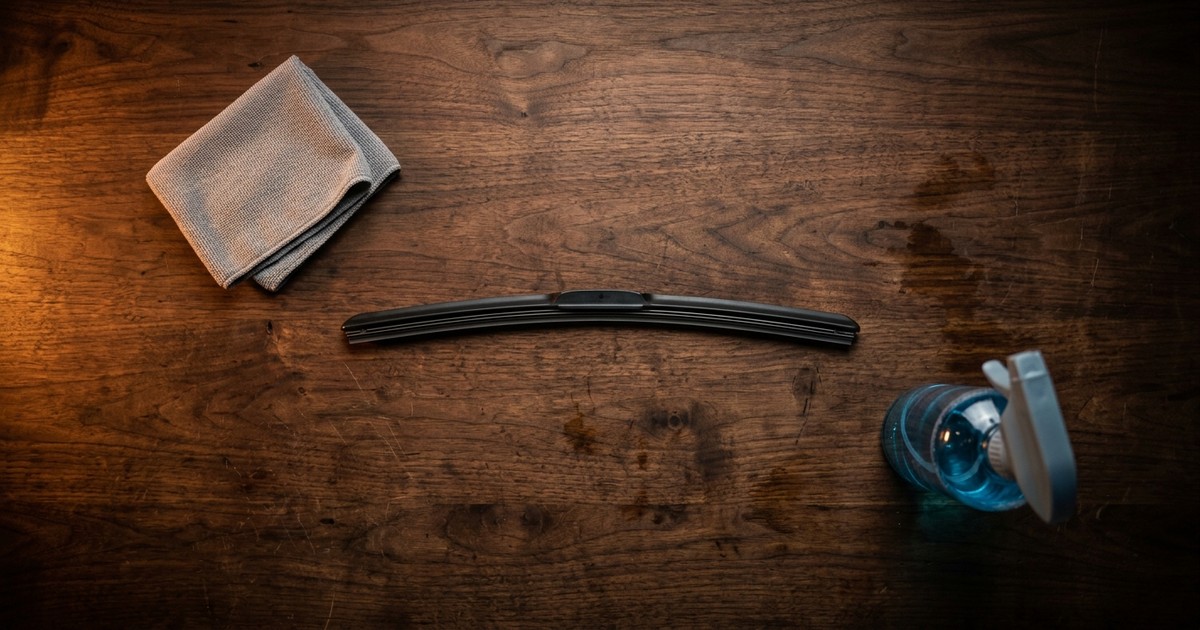
Wipers should be replaced every 6-12 months, sooner if you see streaking, skipping, or hear chattering. The driver and passenger blades are usually different lengths; the AutoZone wiper finder tool gives you the exact sizes for your vehicle. A pair of Rain-X Latitude or Bosch Icon blades runs $30-$45. Dealer or shop replacement costs $60-$95 for the same pair installed.
To install: lift the wiper arm away from the windshield until it locks vertical. Look at how the old blade attaches; most use a J-hook clip with a small release tab. Press the tab, slide the old blade down off the hook, and slide the new blade up until it clicks. ChrisFix's car maintenance video below covers wipers along with every other beginner-level task.
Task 3: Engine Air Filter Replacement (5 minutes, saves $20-$40)
Pop the hood and find the airbox, a black plastic box, usually rectangular, with a large hose going to the engine. Release the metal clips or unscrew the wing screws on top. Lift the lid, pull out the old filter (note the orientation, since there's usually an arrow or a rubber gasket on one side), drop the new filter in the same way, and close the lid. Done.
The Fram CA10262 fits a Honda Civic 2006-2015 and costs $13 at AutoZone. The K&N 33-2403 fits the same vehicle and costs $52, a washable lifetime filter if you keep the car long enough to amortize it. Either is fine. The shop charges $83 (RepairPal national average) for the same swap.
Bonus DIY: Oil Level Check and Top-Off
Pop the hood, find the dipstick (a metal loop, usually yellow), pull it out, wipe it clean with a rag, push it all the way back in, pull it out again, and read the level. The level should be between the "MIN" and "MAX" marks (or "ADD" and "FULL," depending on the manufacturer). If it is low, add a quart of the oil weight specified in your owner's manual, because wrong viscosity in a modern engine can trigger a check engine light and increase wear. Detailed walkthrough in our how to check your oil guide.
DIY vs. Shop: A Real Cost Comparison
The question is not whether to DIY; it is which jobs are worth your time. For tasks under 15 minutes that require no jacks or fluid disposal, DIY almost always wins. For oil changes, the savings ($30-$50) is real but the time and mess (used oil disposal, jack stands, oil filter wrench) raise the bar. For anything involving brake fluid, transmission fluid, or coolant, the safety margin and shop equipment usually justify paying someone.
| Task | DIY Time | DIY Cost (Parts) | Shop Cost | Savings |
|---|---|---|---|---|
| Tire pressure check | 2 min | $0 (one-time $10 gauge) | $0 (most shops, free) | $0 |
| Wiper blade replacement | 5 min | $30-$45 (pair) | $60-$95 | $30-$60 |
| Engine air filter | 5 min | $15-$30 | $83 (RepairPal avg.) | $50-$70 |
| Cabin air filter | 10 min | $15-$25 | $95 (RepairPal avg.) | $70-$80 |
| Headlight bulb (basic) | 10-30 min | $15-$40 (pair) | $50-$120 | $30-$80 |
| Oil check / top-off | 2 min | $7-$12 per quart | $0-$10 (free at most shops) | $0 |
| Oil change (full synthetic) | 30-45 min | $35-$60 | $65-$125 | $30-$65 |
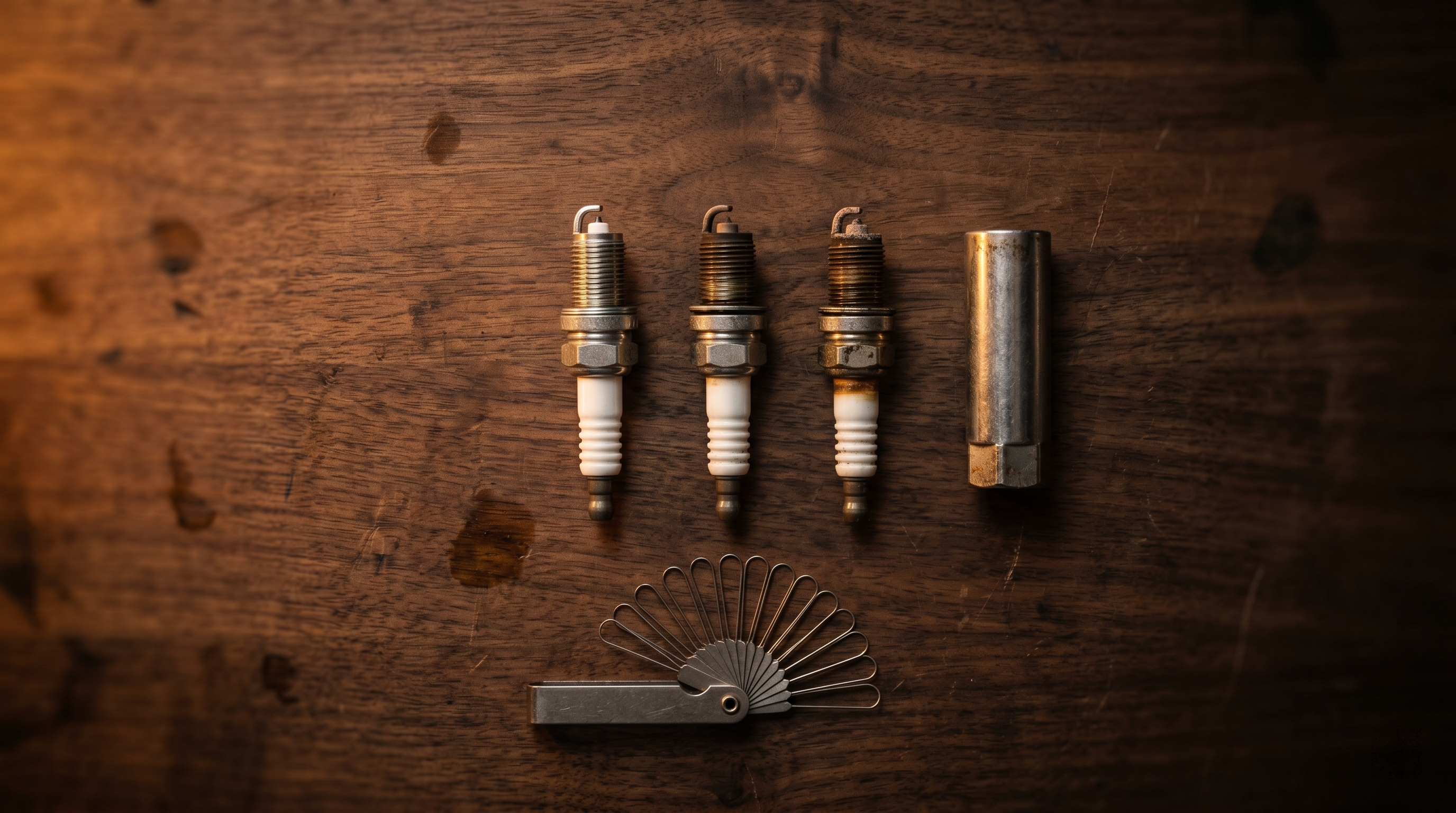
| Spark plug replacement | 30-90 min | $20-$80 | $80-$300 | $60-$220 |
| Brake fluid flush | 60+ min | $15-$25 | $80-$150 | DIY not recommended |
| Coolant flush | 60+ min | $20-$40 | $131-$209 | DIY not recommended |
| Brake pad replacement | 2-3 hrs | $30-$80 (per axle) | $150-$300 (per axle) | $70-$220 |
Numbers reflect 2026 U.S. national averages from RepairPal, AutoZone retail, and AAA. Costs vary by region.
The pattern: every task that involves draining and disposing of fluid (brake, coolant, transmission) carries safety risks for beginners: brake fluid eats paint, hot coolant burns skin, and missed bleeding steps create soft brake pedals. The shop's $131-$209 coolant flush is worth it for the first few years.
How to Find a Trustworthy Mechanic
Look for ASE certification, a willingness to provide a written estimate before any work, and an online review history that shows the shop responds to negative reviews. Avoid the two extremes: chain quick-lube spots that upsell on every visit, and "discount" independents with no reviews. The middle ground, a busy independent shop with 4.5+ stars and 100+ Google reviews, is usually where the math works best.
Four signals of a trustworthy mechanic: (1) ASE certification displayed in the waiting area or on the technician's uniform, from the National Institute for Automotive Service Excellence, which tests mechanics in eight specialty areas. (2) A written estimate before work begins, with parts and labor itemized. (3) Willingness to return the old parts they replaced, so you can verify the work. (4) AAA Approved Auto Repair status, which requires shops to meet AAA's standards and offers AAA-member dispute resolution if something goes wrong. AAA inspects each approved shop and re-inspects annually.
What ASE Certification Actually Means
ASE (Automotive Service Excellence) is a nonprofit that tests and certifies automotive technicians in eight specialties: engine repair, transmission, suspension, brakes, electrical, heating and AC, engine performance, and light vehicle diesel. A "Master Technician" holds all eight certifications. ASE-certified techs must retest every five years. Look for the ASE logo on the shop wall, or ask "are your techs ASE-certified?" If the answer is no or evasive, walk.
Independent Shops vs. Dealerships
For routine maintenance, an independent shop is 20-40% cheaper than the dealer for identical work. Dealer labor rates average $150-$200/hour; independents are typically $80-$130/hour. For warranty work, recall work, and complex software-related issues, the dealer has the proprietary diagnostic tools and is typically the only place that can fix it. The right approach: dealer for warranty and recalls, independent for everything else.
You do not need to use the dealer to keep your warranty valid. The Magnuson-Moss Warranty Act (15 U.S.C. § 2302(c)) prohibits manufacturers from voiding a warranty because you used an independent shop or aftermarket parts. Keep your receipts and the warranty stays intact.
Three Questions to Ask Before Approving Repair Work
- "Can you show me the worn part?" A legitimate shop will pull the brake pad, the air filter, or the spark plug and show you the wear. If they refuse, leave.
- "What does the manufacturer say is the interval for this?" Most upsells (engine flushes, fuel injector cleaning, induction services) are not in the owner's manual. If the shop cannot show you where it is required, it is not required.
- "Can I have the estimate in writing?" California, New York, and 30+ other states require written estimates by law for any work over $25-$50. A shop that refuses to put it in writing is a shop that intends to change the price later.
Building a Beginner Maintenance Timeline
Take your manufacturer's schedule, find your annual mileage, and map services to dates. At 12,000 miles per year on a 2024 Honda CR-V (10,000-mile oil interval, normal schedule), year one looks like this: oil change and tire rotation at 10,000 miles (~$100), and a quick brake inspection at the same visit. Year two: oil change at 20,000 miles, plus cabin air filter ($95). Year three is the 30,000-mile service — the first major checkpoint at $300-$500, covering all filters, brake fluid inspection, and all fluid levels.
For a fuller breakdown by milestone, see our car maintenance by mileage guide, which covers exactly what comes due at 30K, 60K, and 100K miles. The full car maintenance schedule lists every service in order. And the 30-point car maintenance checklist is the inspection list a good shop runs at every visit.
Pinion automates this for first-time owners. You enter your VIN, the app pulls your manufacturer's maintenance schedule, and it sends a push notification when each service is due based on your reported mileage. The reminder includes what the service is, why it matters, and the typical cost range — so the first time a new owner sees "transmission fluid change" on the calendar, they already know what it does and what to budget.
Recalls Are Free — Check Yours Today
NHTSA issued recalls affecting 27.7 million vehicles in 2024. Recall repairs are free at any authorized dealer regardless of vehicle age, mileage, or who owns it — the manufacturer pays for parts and labor. Check yours at nhtsa.gov/recalls with your 17-digit VIN. The VIN is printed on the lower-left of the windshield, on your registration card, and on the driver-side door jamb sticker.
Common recall categories that overlap with maintenance work: brake system defects (leaking lines, ABS module failures), fuel system issues (fuel pump failures, line connections), and electrical recalls (battery management software, engine control modules). If you get a recall notice in the mail, schedule the work — you are not paying for it, and the recall exists because the manufacturer or NHTSA determined the defect creates an unreasonable safety risk.
What to Skip as a Beginner
Three categories of "maintenance" are sold to new car owners and do not need to happen.
Engine flushes ($100-$150). Pouring solvent through the engine to "clean sludge" can dislodge deposits and block oil passages. Manufacturers do not recommend it for engines maintained on the regular oil change schedule.
Fuel injector cleaning services ($150-$200). American Honda calls this "an unnecessary maintenance procedure" for vehicles using Top Tier gasoline (Shell, Chevron, Costco, Mobil, and others — the full list is at toptiergas.com). The detergents in Top Tier gas keep injectors clean.
Transmission flush machines ($200-$400). Honda, Toyota, and Nissan recommend against pressurized flush machines because they can push debris into valve bodies. The correct procedure is a drain-and-fill — the manufacturer's published service. A transmission fluid change costs $150-$250 at an independent shop and does not use a flush machine.
The rule: if it is not in your owner's manual, it is not required. Shops that lead with these upsells are shops that survive on first-time-owner inexperience.
The Cost of Skipping Maintenance vs. Doing It
A worked example for a 2024 Honda CR-V at 60,000 miles:
| Scenario | Maintenance Cost (60K total) | Repair Cost | Total |
|---|---|---|---|
| Followed the schedule | $1,800-$2,400 | $0-$300 | $1,800-$2,700 |
| Skipped half the services | $900-$1,200 | $3,000-$8,000+ (engine, transmission, or brake damage) | $3,900-$9,200 |
The math is consistent across vehicles. Every $1 spent on scheduled maintenance returns $3-$5 in avoided repairs. The Bureau of Labor Statistics Motor Vehicle Maintenance and Repair price index rose 43.6% from January 2019 to January 2025 — roughly double general inflation — so the gap between "did the maintenance" and "skipped the maintenance" is growing, not shrinking.
For first-time car owners, the path forward is short. Learn the five tasks above. Do the three DIY jobs yourself. Find one independent shop with ASE certification and stick with it. Check NHTSA for recalls once a year. That is the entire beginner curriculum, and it covers 90% of what determines whether your car costs you $900 a year or $4,000 a year.
Frequently Asked Questions
Vlad Kuzin
Developer of Pinion. Writes about car maintenance to help people save money and stay safe on the road.